

In recent years, Sweden has made a surprising choice: to return to paper textbooks in schools, after a decade of widespread adoption of digital tablets. This decision has sparked much debate in the field of education, particularly regarding the advantages of traditional methods versus digital tools. But why this return to the past, and what do the Swedish authorities hope to achieve?
Impact of screens on academic results
One of the main factors motivating this decision is the impact of screens on the learning of young students. According to the Swedish government, increased exposure to tablets and screens could harm certain basic skills, such as reading comprehension. A recent study shows that approximately 19% of ten-year-olds have reading difficulties, compared to 12% five years earlier (source: PIRLS). Sweden's Minister of Education, Lotta Edholm, even speaks of a "reading crisis".
Tablets, although useful for certain tasks, do not seem to promote the reading and writing skills of young people, which are essential for lasting academic success. In response, Sweden has chosen to reintroduce paper textbooks into its classrooms to allow for better immersion in reading.
Paper textbooks and reusable stationery: a more sustainable approach?
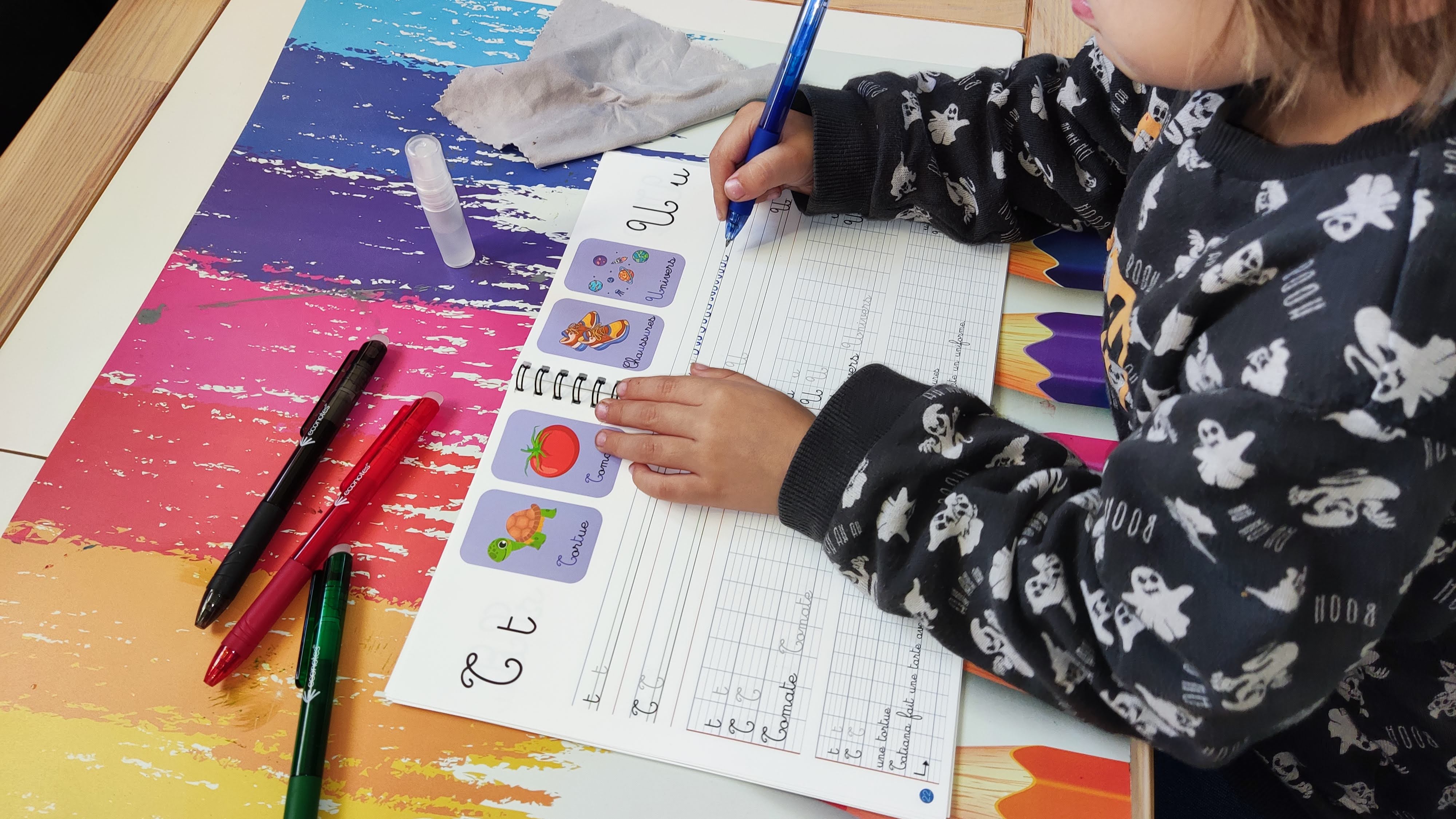
Beyond the pedagogical aspect, the return to paper textbooks also presents an ecological advantage. Using paper textbooks and reusable stationery can limit dependence on electronic devices and extend the lifespan of school materials. Indeed, textbooks are often more durable than digital devices and allow students to consult the same materials from one year to the next. They are also easier to recycle.
Furthermore, the costs associated with the maintenance and renewal of tablets are reduced, as paper textbooks can be used by several generations of students. This reduces electronic waste and the resources needed for manufacturing new devices, which aligns with Sweden's sustainability goal.
Reduced distractions for more focused learning
Screens are known to easily attract children's attention with their bright colors, animations, and notifications. Tablets and computers can become distractions, making it difficult for children to stay focused. In contrast, paper textbooks are simpler educational tools that allow students to concentrate on the essentials without the distractions associated with screens.
By reducing screen time, Sweden also hopes to prevent potential health problems related to excessive exposure, particularly regarding vision and mental fatigue.
Tools adapted for children with learning disabilities
For children with learning disabilities, such as dyslexia or ADHD, the paper format can be more beneficial than screens. Screens can be visually overwhelming and add unnecessary complexity. A paper textbook, on the other hand, is static and allows children to focus on a task without being bombarded by digital stimuli that can be disruptive for those with specific attention needs.
Towards a more balanced education
This reorientation towards paper textbooks in Sweden does not aim to completely remove technology from education. The objective is rather to re-establish a balance between traditional methods and new technologies. Digital tools still have a place in Swedish institutions, but they are now used sparingly, for specific projects where their use is truly beneficial.
Sweden thus wishes to propose a balanced approach, where paper textbooks are used for activities requiring deep reading and sustained attention, while tablets remain complementary tools for occasional research or interactive exercises.
Conclusion
In short, Sweden is taking a turn towards a more traditional, yet equally innovative, approach to education. By reintroducing paper textbooks, the government hopes to improve basic reading and writing skills, reduce classroom distractions, and offer tools better suited for children with specific needs. This choice highlights the importance of a balanced education that promotes the harmonious development of children, away from the constant demands of screens.
As other countries closely observe the results of this approach, Sweden could inspire a new global educational trend, re-centered on the benefits of traditional learning methods combined with technological advancements in a reasoned manner.